
By Dr. Nimish [B.V.Sc] | Veterinarian & Founder of Feedelpoint
If you watch a puppy run, it’s an explosion of energy. Legs go everywhere, paws skid on floors, and they bounce back from collisions like rubber balls.
If you watch a senior dog move, it is often a calculation. They look at the trunk of the car and hesitate. They stand at the bottom of the stairs and look back at you. They take a few extra seconds to rise from their bed in the morning.
For many US dog owners, this is the most heartbreaking part of the aging process. But I have good news: Senior Dog Mobility loss is not inevitable. It is manageable.
In veterinary medicine, we have moved past the days of just saying, “He’s old, let him sleep.” Today, we have a multi-modal approach—using environment, nutrition, and modern medicine—to keep 14-year-old dogs chasing balls (albeit a little slower).
This guide is your master plan for keeping your senior dog moving.
Part 1: The Biology of the “Creak” (What is actually happening?) First Part Of Senior Dog Mobility Issue.
To treat the problem, you must understand it. While senior dogs can suffer from spinal issues or ligament tears (like the ACL), the vast majority of mobility issues in the US come down to one villain: Osteoarthritis (OA).
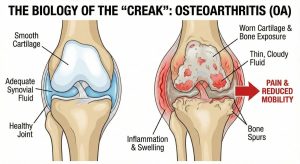
Think of a healthy joint like a well-oiled hinge with a thick rubber bumper (cartilage) between the metal parts (bones).
In a senior dog, three things happen:
- The Bumper Thins: The cartilage wears down.
- The Oil Dries Up: The joint fluid (synovial fluid) becomes thin and watery.
- The Fire Starts: The body realizes there is friction and sends inflammation cells to “fix” it. But this inflammation actually causes pain and heat.
This creates a cycle. The joint hurts, so the dog moves less. Because they move less, the muscles meant to support the joint waste away (atrophy). With less muscle support, the joint takes more impact, and it hurts more. Our goal is to break this cycle.
Part 2: The “Vet Eye” Test (Signs You Are Missing)
Most owners wait for a limp. But by the time a dog is limping, they have likely been in pain for months or years. Dogs are masters of disguise.
As a vet, I look for the “micro-signs” of pain. You can do this at home right now.
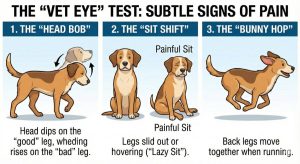
The “Head Bob”
Watch your dog walk toward you. Does their head dip down when one paw hits the ground and shoot up when the other hits?
- The Rule: “Down on the sound.” The head goes down when the good leg hits the ground to put more weight on it, and up when the bad leg hits to pull weight off.
The “Sit Shift”
Ask your dog to sit.
- Normal: They tuck their legs squarely under them.
- Pain: They slide their legs out to one side (the “lazy sit”) or they hover their butt an inch off the ground because full flexion hurts the knees.
The “Bunny Hop”
When your dog runs, do both back legs move together in unison like a rabbit? This is a classic sign of hip pain or lower spine arthritis. They are using their core muscles to swing both legs forward to avoid extending their hips independently.
The “Grumpy” Reflex
If your dog suddenly hates having their lower back brushed, or snaps when you towel-dry their paws, that isn’t aggression. It’s chronic pain.
Part 3: The Environment (Friction is Your Friend)
Before we talk about pills, we have to talk about physics.
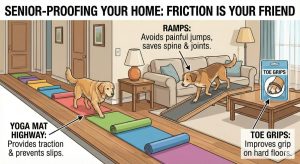
In the US, we love our hardwood, laminate, and tile floors. For a senior dog, these are ice rinks. Every time your dog slips, they micro-tear their muscles and flare up their joints.
1. The Yoga Mat Highway
You don’t need to re-carpet your house. Go to a discount store and buy 5-6 cheap yoga mats. Create a “pathway” down your hallway and through the living room.
- Why it works: It provides a high-friction surface for them to gain speed or slow down without sliding.
2. Toe Grips
If you have a large home, look into ToeGrips or similar products. These are small rubber rings that slide onto your dog’s nails.
- The Science: Dogs use their toenails like soccer cleats for traction. On hard floors, hard nails just slide. The rubber ring engages the floor and provides instant grip.
3. Ramps (The Spine Saver)
If your dog sleeps on your bed or rides in an SUV, a ramp is mandatory.
Jumping down is the enemy. When a dog lands, they take 4x their body weight on their front shoulders. For a 70lb Lab, that is nearly 300lbs of force slamming into arthritic elbows.
- Tip: Don’t just buy a ramp and expect them to use it. You have to train them with treats to walk up and down it, or they will just jump off the side.
Physical Rehabilitation, Physiotherapy and Hydrotherapy
Canine rehabilitation is the dog version of physical therapy. It uses targeted exercises, manual therapy, and tools like underwater treadmills to improve mobility, strength and comfort. Research and clinical reports show benefits for joint range of motion, muscle strength, weight-bearing, and overall quality of life in arthritic dogs.
A rehab plan for a senior dog with arthritis may include:
-
Gentle stretching and range-of-motion exercises
-
Strength-building work like controlled sit-to-stands and walking over low poles
-
Balance exercises on cushions or wobble boards
-
Underwater treadmill or pool work, where buoyancy reduces joint impact while water resistance builds muscle
In the USA, many larger cities now have dedicated rehab clinics or vet hospitals with rehab departments. If you’re considering this:
-
Ask your vet for a referral to a certified canine rehabilitation therapist.
-
At the first visit, bring your X-rays and medication list.
-
Be honest about your budget and time so they can design a realistic plan, maybe starting with a short course of sessions and home exercises you can continue on your own.
Even a few well-taught home exercises can make your dog feel more stable and confident.
Part 4: Medical Management (The Revolution)
If you take nothing else from this article, please remember this: Human painkillers can kill your dog.
Tylenol (Acetaminophen) and Ibuprofen (Advil) can be toxic to dogs. Never share your medicine cabinet.
Veterinary medicine in the USA has undergone a revolution in the last 24 months.
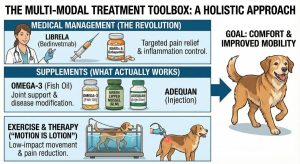
The New Gold Standard: Librela (Bedinvetmab)
You might have seen ads for this. Librela is a monthly injection that has changed the game.
- How it works: Unlike traditional painkillers that process through the liver and kidneys, this is a “monoclonal antibody.” It works like a heat-seeking missile that targets the specific protein (NGF) that sends pain signals.
- The Benefit: Because it isn’t a drug in the traditional sense, it is generally safe for seniors with kidney or liver issues. I have seen dogs who couldn’t walk to the mailbox suddenly start playing fetch again after two doses.
NSAIDs (The Old Faithful)
Drugs like Carprofen (Rimadyl) or Galliprant are still widely used. They are excellent at reducing inflammation. However, they require blood work monitoring to ensure the liver and kidneys are handling them well.
Gabapentin
This is often prescribed alongside other meds. It treats “nerve pain.” If your dog has spinal issues or shoots of pain down the leg, this quiets the nervous system.
Part 5: Supplements (What Actually Works?)
The US pet supplement market is unregulated, meaning anyone can put “Joint Support” on a bottle of sawdust. However, three ingredients have clinical backing.
1. Omega-3 Fatty Acids (Fish Oil)
- The Real Deal: You need high levels of EPA and DHA.
- The Dose: Most over-the-counter treats have tiny amounts. You usually need a liquid pump oil to get the therapeutic dose (approx 75-100mg per kg of body weight, but ask your vet). It acts as a natural anti-inflammatory.
2. Green Lipped Mussel (GLM)
Native to New Zealand, this shellfish is a powerhouse of chondroitin and unique fatty acids. It is the core ingredient in many top-tier joint supplements like Dasuquin or Antinol.
3. Polysulfated Glycosaminoglycan (Adequan)
This isn’t a pill; it’s an injection, but many owners learn to give it at home. It is the only drug approved to actually modify the disease, helping to stop cartilage from wearing away further.
Helping Your Dog With Stairs, Cars and Slick Floors
For many senior dogs, the scariest part of the day is not the walk—it’s the house itself.
Here are some small, practical changes that combine behavior, training and physical support:
Stairs. If your dog is physically able to use stairs, walk them on a short leash at first, one step at a time. Give them plenty of time, and keep your body slightly behind them going up and slightly ahead going down so they feel supported. For dogs who are really struggling, talk to your vet; it may be safer to limit stairs or use gates.
Cars. Many older dogs love car rides but hate the jump. A folding ramp with side rails and non-slip surface makes a huge difference. Start training when you’re not in a hurry: let your dog sniff the ramp, scatter a few treats, and reward any tiny step forward until they’re confidently walking up and down.
Harnesses. A well-fitted support harness with handles over the shoulders or hips lets you give a gentle assist without hurting your own back or your dog’s neck.
Think of all these tools as giving your dog options. The goal is to reduce moments where they have to choose between pain and fear.
Part 6: Exercise – “Motion is Lotion”
The worst advice you can follow is “rest him.”
If an arthritic joint stops moving, it fuses and freezes. We need movement, but we need the right movement.
The 10% Rule
Do not be a “Weekend Warrior.” If your dog walks 10 minutes on weekdays, do not take them on a 2-hour hike on Saturday. That is a recipe for a Monday morning vet visit.
Keep activity consistent. Three short 15-minute walks are infinitely better than one 45-minute walk.
Hydrotherapy
In the US, canine rehabilitation centers are booming. Underwater treadmills are incredible because the water supports the dog’s weight (taking pressure off the joints) while the resistance builds muscle. If you have a center near you, just 10 sessions can reverse muscle atrophy.
Laser Therapy (Photobiomodulation)
Class IV Cold Lasers use light energy to penetrate deep into the tissue, increasing blood flow and reducing pain. It is painless, drug-free, and takes about 10 minutes per session.
Pain, Mobility and Your Dog’s Mood
Chronic joint pain doesn’t just change how a dog walks; it changes how they feel and behave.
Dogs with arthritis may:
-
Avoid games they used to love, not because they’re “lazy,” but because they know those games will hurt later.
-
Growl, snap lightly or walk away when touched over sore joints or when kids hug too hard.
-
Seem restless and pace at night because lying down is uncomfortable.
At the same time, mental stimulation is still important. Once pain is reasonably controlled, many senior dogs enjoy:
-
Nose-work games like “find the treat” in different rooms
-
Short training sessions to practice easy cues (sit, down, touch, shake)
-
Low, easy puzzle toys where they can lick or gently paw food out rather than wrestle with heavy plastic
The sweet spot is “tired but not limping”—both body and mind have had some work, but your dog can still get up comfortably after a nap.
Part 7: When to Call the Vet (Red Flags)
Arthritis is a slow burn. But sometimes, something acute happens. You need to see a vet immediately if:
- Non-Weight Bearing: If your dog is holding a leg up entirely and refuses to put it down. This is often a fracture or a ligament tear (CCL), not just arthritis.
- Sudden Dragging: If they are dragging their back toes or scuffing their knuckles. This can be neurological (IVDD or “slipped disc”).
- Vocalizing: If they yelp when moving. Chronic arthritis is usually silent; acute injury is loud.
Conclusion: Comfort is a Process, Not a Pill
Managing a senior dog’s mobility is not about finding a “cure.” It is about management. It is about looking at your home and your routine through their eyes.
Start with the easy wins: put down the yoga mats and start an Omega-3 supplement. Then, talk to your vet about the new injectable therapies like Librela.
Your dog doesn’t care that they aren’t a puppy anymore. They just want to be with you. And with a little help, they can walk by your side comfortably for years to come.
“While many owners blame ‘old age’ for their dog’s slowing pace, the underlying cause is often untreated pain. To learn how to spot the subtle red flags before your dog starts limping, read my guide on the [7 Early Signs of Arthritis in Senior Dogs].”
FAQs About Senior Dog Joint Pain and Mobility
1. At what age do most dogs start having joint problems?
Joint issues can start surprisingly early, especially in large breeds or dogs with hip or elbow dysplasia, but obvious arthritis signs are most common in dogs over seven or eight years old. Some studies suggest that up to 20% of adult dogs and a much higher percentage of seniors have osteoarthritis.
2. Is it okay to still walk my senior dog with arthritis?
In most cases yes—gentle, regular exercise is recommended. Controlled walks on soft surfaces help maintain muscle and joint health. What you want to avoid is explosive play like hard ball-chasing or long hikes that leave your dog limping afterward. Always check with your vet about your dog’s specific limits.
3. Do I need joint supplements if my dog is already on medication?
Not necessarily. Supplements are optional “helpers,” not replacements for weight control, exercise and appropriate meds. Omega-3s have some of the strongest evidence for arthritis support; glucosamine and chondroitin have mixed results. Talk to your vet about whether adding a supplement makes sense for your dog’s situation and budget.
4. How quickly should I expect improvement once we start treatment?
It depends on the combination of treatments. Pain medication can sometimes make a visible difference within days. Weight loss, rehab exercises and supplements usually take weeks to months. This is why your mobility baseline—videos, notes and frequent check-ins—is so important for seeing progress over time.
5. Can hydrotherapy really help my senior dog?
Yes, for many arthritic dogs hydrotherapy is one of the most joint-friendly ways to exercise. The water supports body weight, reduces impact on joints and provides gentle resistance that builds muscle. Studies and clinic reports show improved mobility, strength and quality of life in dogs who do supervised hydrotherapy as part of a broader treatment plan.
Veterinary Disclaimer
I am a veterinarian, but I am not your dog’s veterinarian. The information provided in this article—especially regarding medications like Librela and NSAIDs—is for educational purposes only. Do not change your dog’s medication or dosage without consulting your primary care veterinarian in the US.
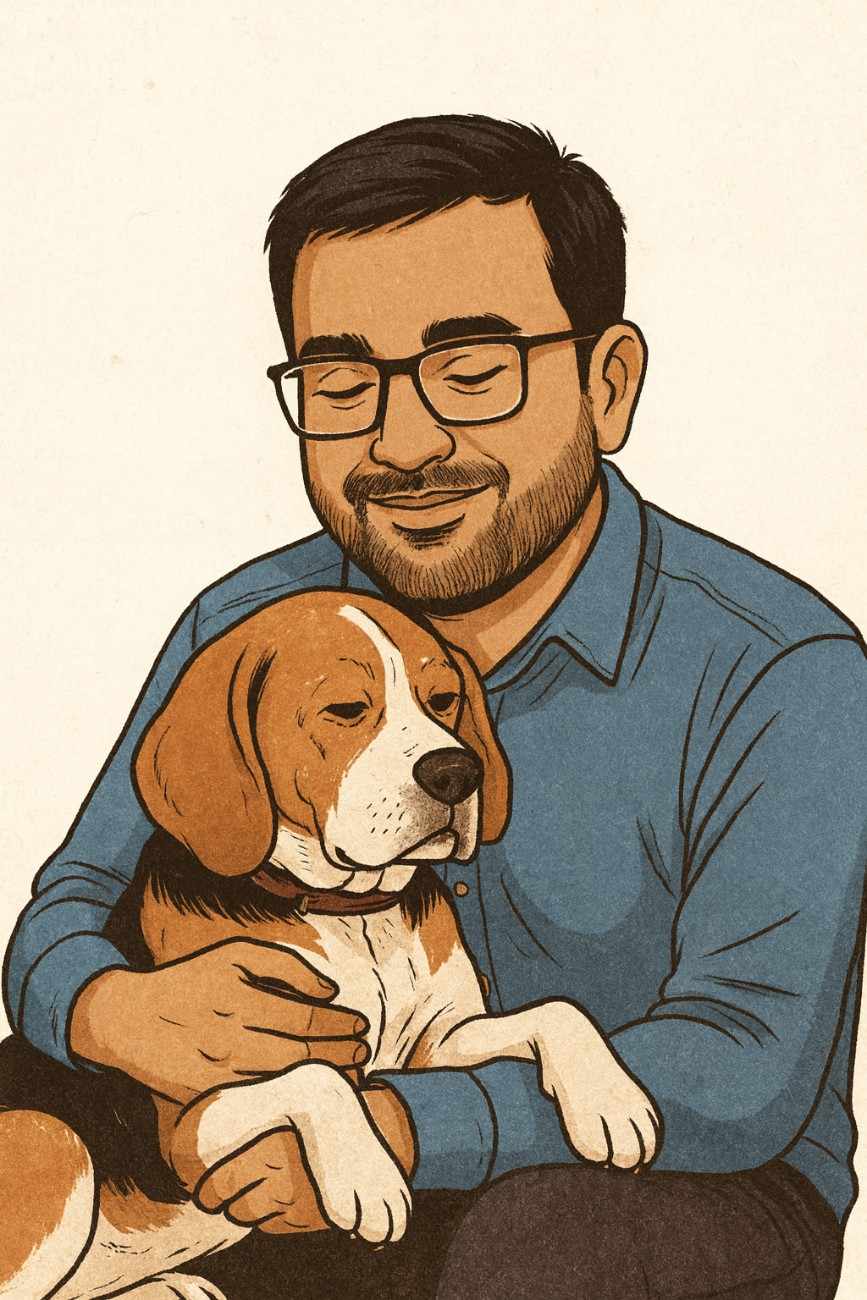
I created this platform with a single mission: to bridge the gap between complex medical information for senior dog owners and practical loving home care.
My Background: I hold a Bachelor of Veterinary Science (BVSc). My education gave me the medical foundation to understand the physiology of aging dogs, from joint mobility to nutritional needs.